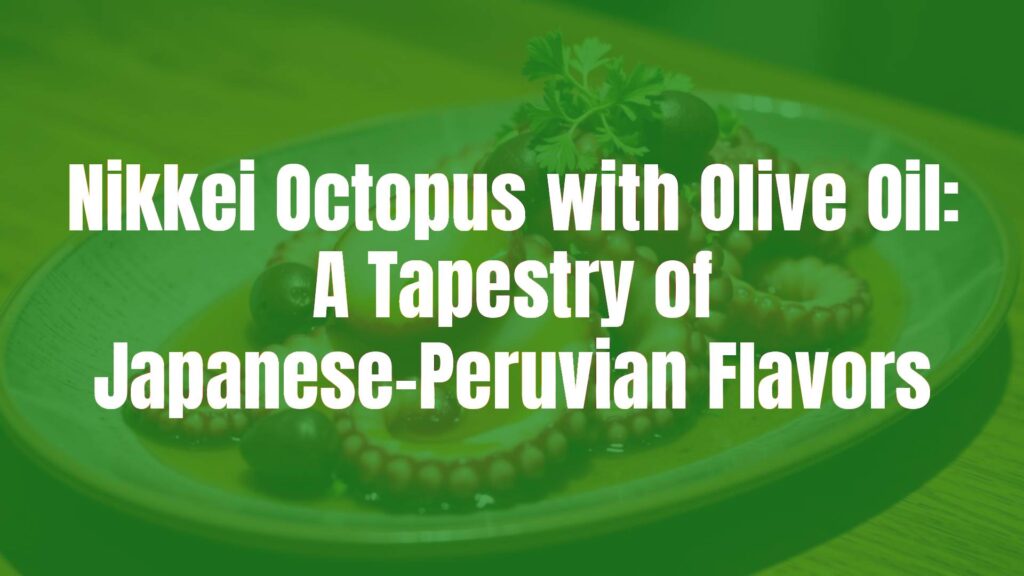
Introducing Octopus with Olive Oil in Nikkei Cuisine
The vibrant dish known as octopus with olive oil perfectly epitomizes the essence of Nikkei cuisine, an inventive fusion born from the meeting of Japanese and Peruvian culinary traditions. Marrying tender octopus with the fruity aroma of Peruvian olives and the silken touch of olive oil, this culinary creation stands out as a testament to cross-cultural flavor harmony. It is often served as an appetizer or alongside fresh salads, offering both visual allure and complex tastes in every bite.
Historical Context: When Cultures Connect
The roots of octopus with olive oil trace back to the late 19th and early 20th centuries, during which a significant wave of Japanese immigrants settled along Peru’s coast. These newcomers adapted their mastery of seafood to the rich variety of local ingredients, giving rise to a unique gastronomic landscape. Over generations, the Japanese reverence for refined techniques, such as the delicate simmering and careful slicing of octopus, blended seamlessly with Peru’s passion for bold flavors, aromatic sauces, and native produce, most notably the famed botija olive.
Key Elements and Preparation
This Nikkei dish is distinguished by a few essential components. The octopus is typically cooked until perfectly tender, capturing a melt-in-the-mouth quality prized in Japanese cuisine. Olive oil (most often extra-virgin) is used both as a finishing drizzle and, at times, infused with aromatic herbs or mild spices for extra depth. The iconic purple olive sauce, made from Peruvian botija olives, lends the dish a distinctive earthy richness and a vibrant hue. The final plating is enhanced with subtle garnishes, such as microgreens, sliced vegetables, or even a touch of yuzu zest, reflecting Japanese presentation aesthetics.
A Symphony of Taste, Texture, and Appearance
Octopus with olive oil is celebrated for its juxtaposition of textures: the gentle resistance of the octopus against the silky, velvety olive sauce. The flavor palate intertwines the briny taste of the sea with the fruity earthiness of Peruvian olives and the delicate grassiness of premium olive oil. Visually, the dish stands out with deep purples and glossy olive-hued drizzles, often served on minimalist, elegant plates in line with Japanese traditions.
Japanese and Peruvian Culinary Fusion
At the core of the dish lies its singular Nikkei identity, forged through an ongoing exchange of ingredients, methods, and flavors. Japanese chefs introduced subtlety and precise seafood preparation, while Peruvians contributed robust local produce and the native botija olive, celebrated for its intense, fruity profile. The preference for light dressings—eschewing heavy sauces for a bright olive oil finish—illustrates a meeting of the two cultures’ culinary philosophies, each enhancing the other for a wholly new experience.
Variations and Modern Takes
Chefs across Peru and in Nikkei kitchens worldwide often innovate on the classic template: some add hints of soy sauce or a dash of sesame oil to the olive mixture for extra umami. Others incorporate fresh chili slices or citrus elements, such as lime or Japanese yuzu, offering brightness and a further dimension of flavor. These variations not only highlight the dish’s adaptability but also showcase the ongoing creative dialogue between Japanese and Peruvian food identities.
Conclusion: Octopus with Olive Oil as Nikkei Icon
Embodied in octopus with olive oil is the spirit of the Nikkei tradition—respect for ingredients, boldness in fusion, and a continual evolution of culinary artistry. Whether sampled in a fine-dining restaurant or discovered in a family-run Nikkei eatery, this dish invites diners into the rich history and inventive soul of Peruvian-Japanese cuisine.
