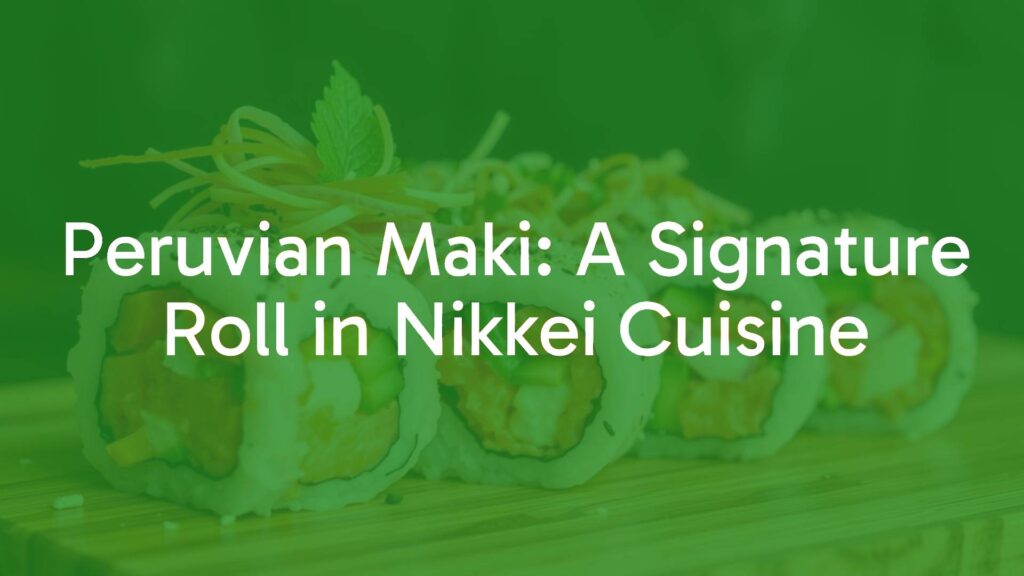
Introducing Peruvian Maki: A Symbol of Nikkei Creativity
The Peruvian maki is an emblematic example of the culinary innovation found within Nikkei cuisine—a vibrant fusion of Japanese and Peruvian gastronomic traditions. This unique sushi roll stands distinct among global maki varieties, offering a delightful blend of flavors, textures, and ingredients that reflect Peru’s rich biodiversity and Japan’s refined culinary techniques.
Historical Context: Where East Meets West in a Roll
The emergence of the Peruvian maki is closely tied to the arrival of Japanese immigrants in Peru in the late 19th and early 20th centuries. As these communities adapted to local foods and cultural habits, sushi began to fuse with Peruvian culinary influences. Over time, the maki—originally a simple Japanese sushi roll—transformed into a creative platform where legacy and locality coexist. The Peruvian maki thus stands as a testament to decades of cross-cultural exchange and culinary experimentation.
Key Elements and Distinctive Ingredients
What sets the Peruvian maki apart from traditional Japanese variants is its bold use of native Peruvian ingredients and innovative toppings. While you’ll typically find vinegared rice and seaweed (nori) as the fundamental layers, the fillings and garnishes are where Peruvian makis shine. Popular fillings include local seafood such as shrimp, octopus, and whitefish, frequently paired with Andean avocado or creamy cheeses. Distinctively Peruvian flavors appear in bright aji amarillo (yellow chile) sauce, sweet potato tempura, and the signature inclusion of sauces like spicy mayonnaise or acevichado, a nod to the beloved Peruvian ceviche.
The Fusion of Technique and Flavor
The preparation of Peruvian maki melds Japanese precision with Peruvian zest. Chefs utilize classic sushi-rolling skills, but they innovate with both cooked and raw elements, crunchy toppings such as plantain chips or fried quinoa, and sauces layered for visual appeal and taste complexity. Many maki rolls are finished with a torch (aburi style), gently searing the top and adding smoky nuance, a technique adapted to highlight local ingredients.
Flavor Profile, Texture, and Appearance
Peruvian makis are visually striking, often adorned with vibrant sauces and garnishes. Each bite offers a medley of textures: the soft rice, crisp tempura or chips, creamy avocado or cheese, and the satisfying pop of fresh seafood. The flavor profile is distinctively Nikkei, with the umami of traditional soy, the tang of ceviche-inspired dressings, and the subtle heat of Peruvian peppers creating a complex yet harmonious experience.
Popular Variations and Contemporary Twists
Peruvian maki comes in countless interpretations, reflecting the region’s creativity and diverse palate. The “acevichado maki”—filled with fish and avocado, topped with a ceviche-style lemony sauce—remains an enduring favorite. Others feature chifa (Peruvian-Chinese) ingredients, or even Amazonian flavors, embodying Peru’s multicultural landscape. Vegetarian and vegan renditions are also increasingly common, incorporating local tubers and quinoa for inclusivity and novelty.
A Contemporary Classic of Nikkei Cuisine
Today, the Peruvian maki stands as a hallmark of modern Peruvian dining and Nikkei heritage, bridging continents on a single plate. It invites exploration and reinvention, resonating with both tradition and cutting-edge culinary artistry.
