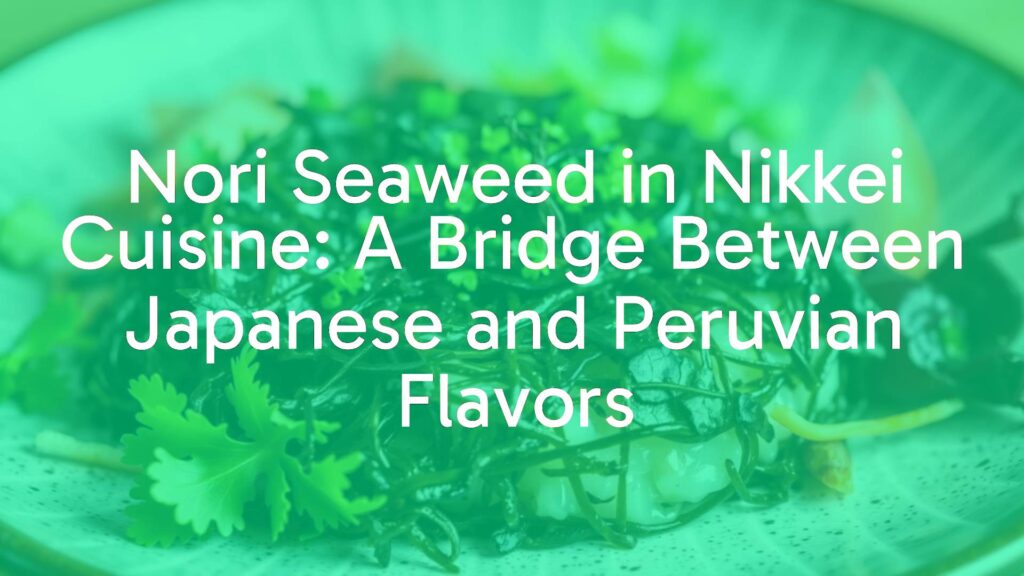
Nori Seaweed: A Cornerstone Ingredient in Nikkei Cuisine
An Introduction to Nori’s Characteristics
Nori seaweed, with its deep green hue and delicate, papery texture, stands as a signature component in Japanese gastronomy. In Nikkei cuisine—the unique fusion of Japanese and Peruvian culinary traditions—nori’s properties play a distinct and essential role. Its subtly briny flavor, umami richness, and crisp-to-tender texture after contact with moisture help define the sensory experience of Nikkei dishes, setting them apart from other fusion cuisines.
Historical and Cultural Context of Nori in Nikkei Culinary Evolution
The story of nori in Nikkei cuisine is rooted in the early waves of Japanese immigration to Peru in the late 19th and early 20th centuries. Japanese settlers brought with them staples like nori, which not only connected them to home, but also inspired a new approach to local ingredients. While nori was initially rare and precious in Peru, Japanese families would sometimes rely on imports or improvise with local seaweeds. As trade expanded, genuine nori became widely available, finding its way into Peruvian kitchens and onto Nikkei menus, where it remains a symbol of cross-cultural culinary identity.
How Nori Integrates Japanese Techniques with Peruvian Ingredients
Nori’s adaptability enables it to serve as a flavor and textural bridge in Nikkei cuisine. Traditional Japanese techniques—such as rolling, wrapping, and garnishing with nori—are preserved, yet they are adapted to accommodate Peruvian staples. For example, the classic maki roll is reimagined using native seafood like corvina or Amazonian river fish, and even includes ingredients like rocoto pepper for heat or avocados harvested from Andean valleys.
Additionally, nori is often used as a crispy topping or crumbled over ceviches, adding umami complexity and contrast to bright, citric flavors. In Nikkei restaurants, it is common to find nori enhancing tiraditos and other raw fish specialties, where the marriage of Japanese precision and Peruvian vibrancy is evident in every bite.
The Defining Role of Nori in Nikkei Dishes
Nori is more than a visual or flavor garnish in Nikkei food; it signifies the dialogue between land and sea, tradition and innovation. Its appearance—strikingly dark against white rice or vibrant seafood—often signals the Nikkei identity of a dish. Its flavor profile, at once earthy and marine, bridges the tastes of soy sauce, citrusy leche de tigre, and chili, harmonizing disparate flavors into a singular Nikkei expression.
Through its versatility, nori upholds Japanese culinary traditions while embracing Peruvian terroir. Its essential role in sushi, hand rolls, and innovative Nikkei dishes cements its status as a symbol of fusion, reflecting both respect for heritage and the creativity of migration. For those experiencing Nikkei cuisine, nori offers a taste of the historical journey and dynamic spirit that define this remarkable culinary landscape.
