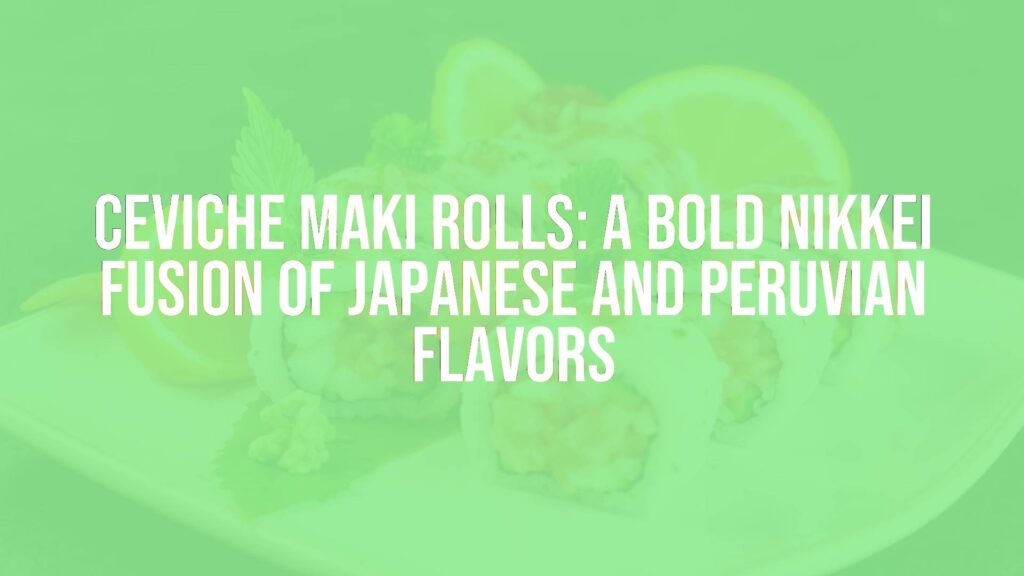
Ceviche Maki Rolls: Where Nikkei Innovation Shines
A Contemporary Fusion Dish
Ceviche maki rolls are a standout example of Nikkei cuisine, seamlessly bringing together two iconic culinary traditions: the precision and artistry of Japanese sushi-making and the bold, refreshing flavors of Peruvian ceviche. This dish exemplifies the creativity and adaptability found at the crossroads of these cultures, offering a sushi roll that is filled or topped with a lively medley of marinated seafood, zesty citrus, and aromatic Peruvian ingredients. The result is a dynamic, visually striking roll that captures the essence of both worlds.
Origins and Culinary Evolution
The roots of ceviche maki rolls are intertwined with the immigrant story of Japanese communities in Peru, especially in Lima, where Japanese culinary technique gradually merged with local traditions. While both sushi and ceviche have rich histories independently, their marriage in the form of a maki roll is a modern innovation, arising from the Nikkei movement’s constant pursuit of harmonious new expressions. As Nikkei restaurants proliferated in South America and beyond, chefs began experimenting with ceviche—a Peruvian national dish—by incorporating it into sushi formats, resulting in ceviche maki rolls.
Key Ingredients and Distinctive Characteristics
At the heart of ceviche maki rolls lies the combination of expertly prepared Japanese sushi rice and seaweed, enveloping a filling of marinated seafood—typically fresh white fish or shrimp—cured in bright tumbling juices of lime or lemon, often mixed with ají amarillo (yellow chili pepper), red onions, cilantro, and sometimes corn or sweet potato. The fish is typically cured just enough to retain a tender, almost sashimi-like texture, while adopting the piercing acidity and aromatic heat that define ceviche. Each bite balances firmness with delicate creaminess, crunch from vegetables, and the subtle umami of nori.
Techniques and Fusion Elements
The process begins with the classic Japanese method of preparing short-grain rice seasoned with vinegar and forming it on a nori sheet. The twist arises in the filling: rather than raw fish in the traditional style, the seafood is first “cooked” through marination in citrus, then drained and blended with ingredients native to Peru. The roll may be further garnished with fine slices of avocado, spicy mayo, or even tangy leche de tigre sauce, reinforcing the Peruvian flair. Some variations serve the ceviche as a topping (gunkan-style) or use flambé techniques for extra flavor.
Flavors, Textures, and Presentation
Visually, ceviche maki rolls tend to be vibrant, often featuring brightly colored chilies and herbs. The initial taste is zesty and refreshing, layered atop the subtle sweetness of the rice and savory notes of nori. Unlike traditional maki, the acidity from the cured fish provides a refreshing counterpoint to the dense rice, making the rolls feel lighter and more aromatic. Texturally, diners experience a symphony of creamy, firm seafood; al dente rice; and crisp vegetables.
Popular Variations and Creative Twists
Chefs often adapt ceviche maki rolls by experimenting with different types of seafood—such as octopus, scallops, or mixed shellfish—or by varying the marinade’s intensity. Additions like avocado, mango, or sweet potato pay further tribute to Peruvian culinary staples, while spicy elements and decorative sauces draw out umami and contrast. Some versions are even deconstructed, serving ceviche atop sushi rice rather than rolled, echoing the constant evolution that defines Nikkei cuisine.
Conclusion: A Modern Nikkei Classic
Ceviche maki rolls epitomize the Nikkei approach to food: combining deep respect for Japanese culinary discipline with the vivid flavors and ingredients of Peru. As a beloved dish in many contemporary Nikkei eateries, it continues to surprise and delight diners, showcasing the limitless creativity unleashed when two cultures come together in the kitchen.
