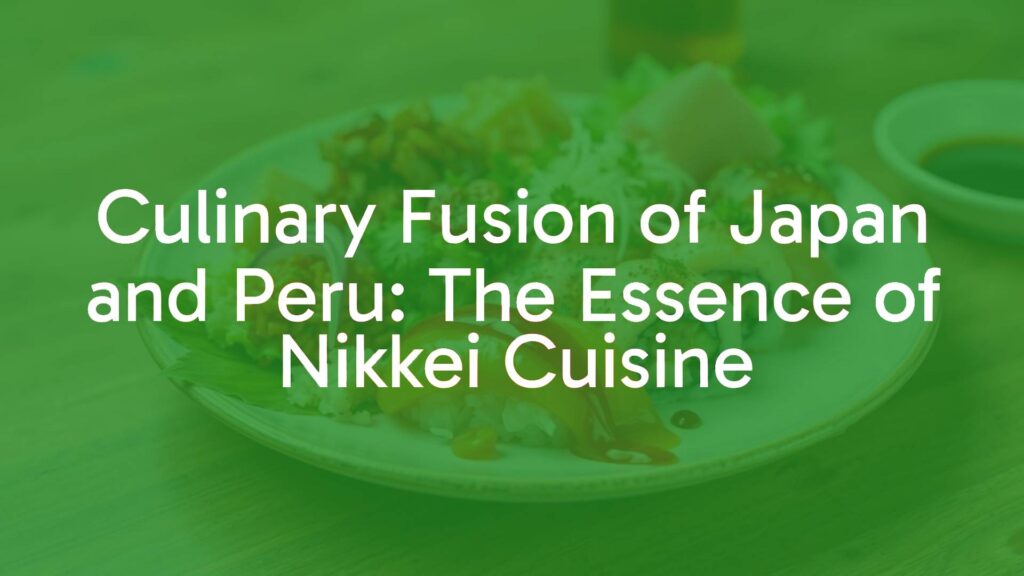
Introduction to the Culinary Fusion of Japan and Peru
The culinary fusion of Japan and Peru—best known as Nikkei cuisine—represents a unique and vibrant intersection of flavors, traditions, and culinary philosophies. Originating from the Japanese diaspora in Peru, this distinctive fusion celebrates the marriage between Japanese refinement and Peruvian vibrancy, bringing about a style that has captivated the global culinary stage.
Historical Roots of Nikkei Cuisine
Nikkei cuisine is the direct result of Japanese immigration to Peru beginning in the late 19th century. As Japanese communities settled, they found themselves adapting their homeland cooking to the local produce and the rich, complex flavors of Peruvian food. Over generations, this led to an organic and ongoing process of cultural and gastronomic exchange, ultimately forging a new cuisine that honors both ancestries.
Cultural Exchange and Culinary Adaptation
The adaptation was both practical and creative. Peruvian chefs of Japanese descent began integrating Peruvian ingredients such as potatoes, aji peppers, and corn, while still drawing on traditional Japanese culinary methods like precise knife skills, delicate presentation, and the quest for umami. Conversely, techniques like marination in citrus and the bold use of chilies were adopted into the preparation of staple Japanese ingredients, such as raw fish from sashimi.
Defining Features and Ingredients of this Fusion
This fusion cuisine is defined by its emphasis on freshness, minimalism, and a harmonious balance of flavors. Dishes often feature:
- Ceviche-style preparations of fish with Japanese elements like miso or soy sauce
- The use of Peruvian native ingredients—aji amarillo, rocoto chilies, quinoa—paired with Japanese elements like wasabi, sushi rice, and nori
- Techniques melding Peruvian marination with Japanese knife work and presentation
These dishes are characterized by lively acidity from citrus, the gentle heat of chili, the umami of fermented seasonings, and brilliantly colorful presentations.
Visual Appeal and Textural Harmony
Appearance plays a crucial role, with an emphasis on clean lines and inviting contrasts in texture. Crispness from vegetables, the tenderness of fresh seafood, and the creamy sashimi-like textures combine for a multidimensional experience with every bite.
Signature Dishes and Common Variations
Among the most iconic representations of this fusion are Tiradito—a sashimi-like fish dish dressed in spicy Peruvian sauces, and Nikkei-style sushi, which might tuck Peruvian flavors or ingredients alongside traditional fillings. The spectrum stretches even further, to include stews blending soy with aji panca, or tacos and empanadas incorporating Japanese grilled meats or marinades. Each chef imparts their personality, experimenting with the ratios and flavor profiles while maintaining a respect for both heritages.
The Impact and Legacy
Today, Nikkei cuisine stands as a beacon of cross-cultural creativity. It showcases not only a culinary partnership but a lasting dialogue between two nations, marked by curiosity, ingenuity, and deep respect for food traditions. Now celebrated internationally, this culinary movement continues to evolve, offering new possibilities while remaining rooted in its dual identities.
