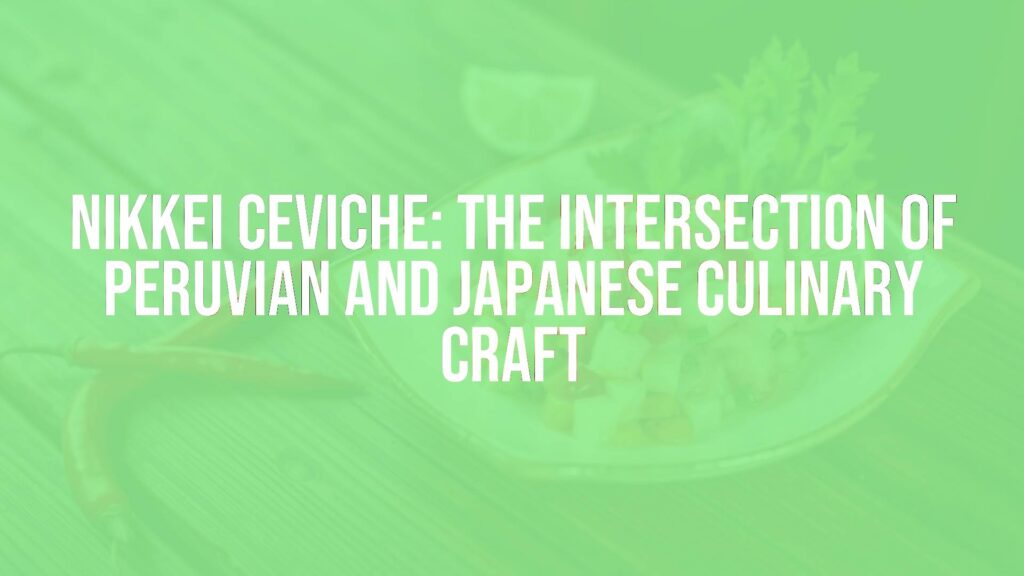
Nikkei Ceviche: Redefining a Classic Through Fusion
Introduction to Nikkei Ceviche
Nikkei ceviche stands as an emblematic dish within Nikkei cuisine, melding the vibrant flavors of Peru with the refined techniques of Japanese gastronomy. As a modern reinterpretation of Peru’s beloved ceviche, this dish embodies the innovative spirit arising from the meeting of two rich culinary traditions. Its distinct profile, characterized by freshness and umami, continues to capture the interest of both food connoisseurs and adventurous diners worldwide.
Historical Roots and Culinary Evolution
The origins of Nikkei ceviche are deeply rooted in the Japanese migration to Peru in the late 19th and early 20th centuries. Japanese immigrants brought with them a tradition of pristine fish salads and sashimi, which, over generations, began to blend with Peru’s native gastronomy. The interaction between Peruvian lime-cured fish and Japanese approaches to handling seafood led to a new genre of ceviche—elegant in presentation, precise in cut, and accentuated by umami-rich elements.
Defining Characteristics of Nikkei Ceviche
What sets Nikkei ceviche apart is its fusion of meticulous Japanese preparation methods with iconic Peruvian flavors. Unlike traditional ceviche, which often focuses on bold acidity and chili heat, Nikkei ceviche frequently employs sashimi-grade fish sliced with precision, resulting in a tender, melt-in-the-mouth texture. The marinade (or “leche de tigre”) typically incorporates not only lime juice but also dashi, soy sauce, or even miso, adding layers of savoriness and balancing the tartness of citrus.
Key Ingredients and Components
The fish used in Nikkei ceviche is at the heart of the dish—commonly featuring varieties beloved in both cultures, such as tuna, yellowtail, or sea bass. The marinade forms the flavor backbone, blending Peruvian ají (often ají amarillo or rocoto) with Japanese staples like soy sauce, rice vinegar, or toasted sesame oil. Garnishes reflect both heritages as well, pairing sweet potato or Peruvian choclo corn with slivers of nori, shiso leaf, or crispy tempura bits. The interplay between the zesty, spicy, and savory makes Nikkei ceviche uniquely captivating.
Typical Preparation and Presentation
The preparation process emphasizes freshness and visual appeal. Fish is sliced in sashimi-style cuts, then gently mixed with the marinade moments before serving, allowing flavors to penetrate without overwhelming delicate textures. Presentation draws from Japanese minimalism, with artful arrangement and thoughtfully selected accompaniments. The resulting dish is visually striking, often juxtaposing bold colors from native Peruvian ingredients with the clean lines typical of Japanese cuisine.
Flavor Profile, Texture, and Experience
Nikkei ceviche offers a complex yet harmonious flavor experience. The acidity of lime and the heat of chilies are softened by umami-rich Japanese condiments, creating a balanced bite that is vibrant but not overpowering. The texture is notably supple due to the quality and precise handling of the fish, while crunchy or creamy elements from various garnishes provide contrast. Aromatic touches, such as sesame or shiso, further enrich the senses.
Variations and Adaptations
While fish is the traditional star, contemporary Nikkei ceviche may feature scallops, octopus, or even vegetarian options that adopt similar flavor techniques. Chefs continue to experiment with marinades, incorporating ingredients like yuzu, ponzu, wasabi, or pickled Peruvian vegetables. The flexibility of the Nikkei approach means no two ceviches are exactly alike, fostering a spirit of innovation grounded in respect for both culinary cultures.
Nikkei Ceviche: A Vibrant Symbol of Fusion
Nikkei ceviche serves as a delicious testament to the possibilities that arise when food traditions interact and evolve. By bringing together Japanese precision and Peruvian boldness, it creates a nuanced, flavorful, and visually appealing dish that resonates with diners across the globe. Its ongoing evolution reflects both the adaptability of fusion cuisine and the enduring popularity of ceviche in all its forms.
