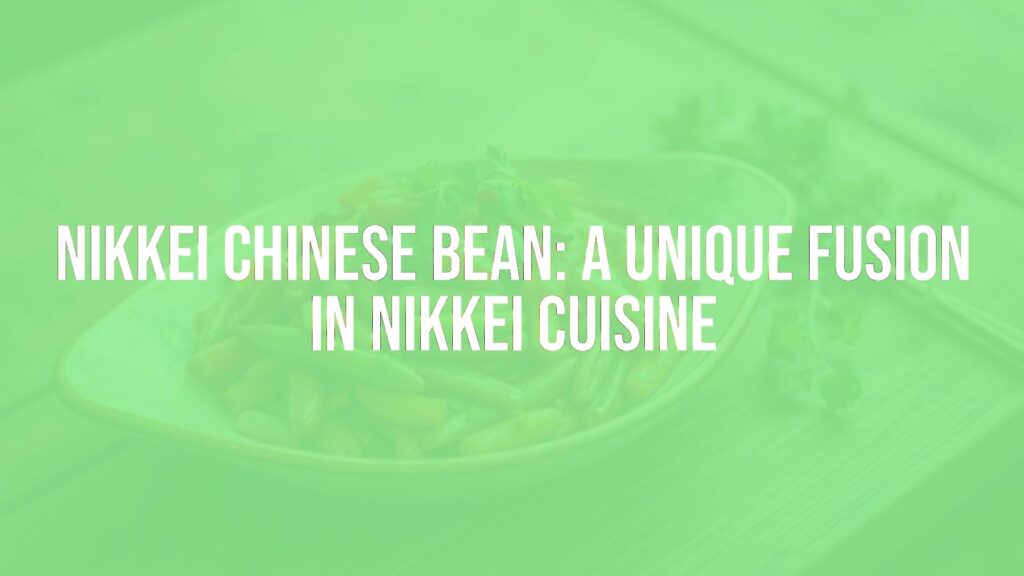
Nikkei Chinese Bean: Where Japanese Precision Meets Peruvian Tradition
Overview of Nikkei Chinese Bean
Nikkei Chinese Bean is a distinctive creation within Nikkei cuisine, reflecting the dynamic interplay between Japanese migration to Peru and the continually evolving local food culture. This dish stands out for its use of Chinese-style beans—commonly known as frejol chino in Peru—prepared with both Japanese and Peruvian culinary influences. The result is a vibrant fusion dish that serves as a side or hearty component in a broader Nikkei meal.
Historical Roots and Cultural Significance
Nikkei cuisine was born from the waves of Japanese immigration to Peru in the late 19th and early 20th centuries. As settlers adapted to their new home, they blended familiar Japanese recipes with available Peruvian produce, often drawing inspiration from the vibrant Chinese-Peruvian (chifa) gastronomy already flourishing in Lima and other cities. The use of Chinese beans in Nikkei cooking became a culinary crossroad—honoring the agricultural traditions of Peru, the wok-cooked techniques of Chinese immigrants, and Japanese approaches to flavor balance and umami.
Key Ingredients and Preparation Techniques
The heart of Nikkei Chinese Bean is the mung bean or similar beans grown widely in Peru, known for their smooth texture and subtle flavor. These beans are typically simmered to achieve a creamy consistency, then seasoned using a blend of ingredients such as soy sauce, mirin, ginger, garlic, and Peruvian staples like ají amarillo (yellow chili) or cilantro. Sometimes, dashi stock or miso is introduced to impart additional layers of umami, while occasional touches of sesame oil nod to Asian culinary traditions.
Reflecting Japanese technique, meticulous preparation and balance of seasoning are essential. The dish may be finished with a garnish of nori strips, toasted sesame seeds, or sliced green onions, echoing both Peruvian and Japanese garnishing styles.
A Marriage of Flavors and Textures
Nikkei Chinese Bean captures attention for its complex yet harmonious taste. The beans provide a creamy base, subtly rich and earthy, complemented by the savory notes of soy, the gentle heat of Peruvian chili, and the aromatic freshness of herbs. Flavors meld seamlessly, offering both comfort and intrigue—at once familiar and innovative. The final dish—often flecked with herbs or nori—boasts a visually enticing presentation in earthy tones of green and yellow, accented with occasional hints of red chili.
Variations and Modern Adaptations
While mung beans are most traditional, variations exist using other legumes such as adzuki beans or Peruvian kidney beans, changing the texture and flavor profile. Some versions integrate additional Japanese mushrooms, shiitake, or local Peruvian vegetables for complexity, while adventurous chefs may add a touch of miso or even a poached egg to enrich the dish further. Whether served as a vegetarian main or as an accompaniment to seafood or grilled meats, Nikkei Chinese Bean remains adaptable and endlessly creative.
Fusion at Its Best
Nikkei Chinese Bean is emblematic of the broader Nikkei philosophy—merging Japanese discipline and Peruvian vibrancy. Through its skillful blending of culinary heritages, the dish highlights the ongoing story of Peru’s diverse food scene, showcasing how tradition and innovation come together to delight diners and preserve cultural memory, one plate at a time.
