Introduction to Nikkei Tiger Milk
Few components capture the fusion spirit of Nikkei cuisine as vibrantly as Nikkei tiger milk—an electrifying marinade that forms the backbone of many Peruvian-Japanese creations. Known as “leche de tigre” in Spanish, this liquid is not only a cornerstone in classic Peruvian ceviche, but it has been reinterpreted and elevated by the Nikkei culinary tradition, reflecting a harmonious encounter between Japanese technique and Peruvian boldness.
The Origins and Cultural Significance
Tiger milk originated as a zesty, restorative byproduct of marinating fresh fish in lime juice, traditionally enjoyed by Peruvians for its invigorating flavor and even supposed restorative properties. With the arrival of Japanese immigrants in Peru during the late 19th and early 20th centuries, this flavorful liquid underwent a transformation. Japanese culinary sensibilities—characterized by meticulous ingredient handling and an appreciation for umami—melded with Peru’s zestful ceviche traditions, giving birth to the refined and balanced Nikkei tiger milk.
Key Elements and Flavors
Nikkei tiger milk is distinguished by its clean, bright, and layered flavors. Essential ingredients typically include freshly squeezed Peruvian lime juice, aji amarillo or aji limo chili peppers for heat, coriander, garlic, red onion, and the briny juices released from raw fish. What sets the Nikkei version apart is the strategic incorporation of Japanese influences, such as dashi (a delicate umami-rich stock), soy sauce, mirin, or sometimes even yuzu—a Japanese citrus—adding depth and complexity. The resulting liquid strikes a balance between acidity, heat, saline notes, and savory umami, making it both mouthwatering and refreshing.
Preparation Techniques: A Blend of Traditions
True to its hybrid origins, Nikkei tiger milk embraces both Japanese precision and Peruvian vibrancy in its preparation. Fish is handled with sashimi-like respect for freshness and texture, while the quick curing in citrus honors classic Peruvian methods. The tiger milk is vigorously mixed to emulsify the flavors, sometimes incorporating subtle Japanese touches like finely grated ginger, or a few drops of soy sauce to round out the profile. The resulting liquid is milky and opaque, often poured over ceviche or served as a shooter.
Uses and Presentation in Nikkei Cuisine
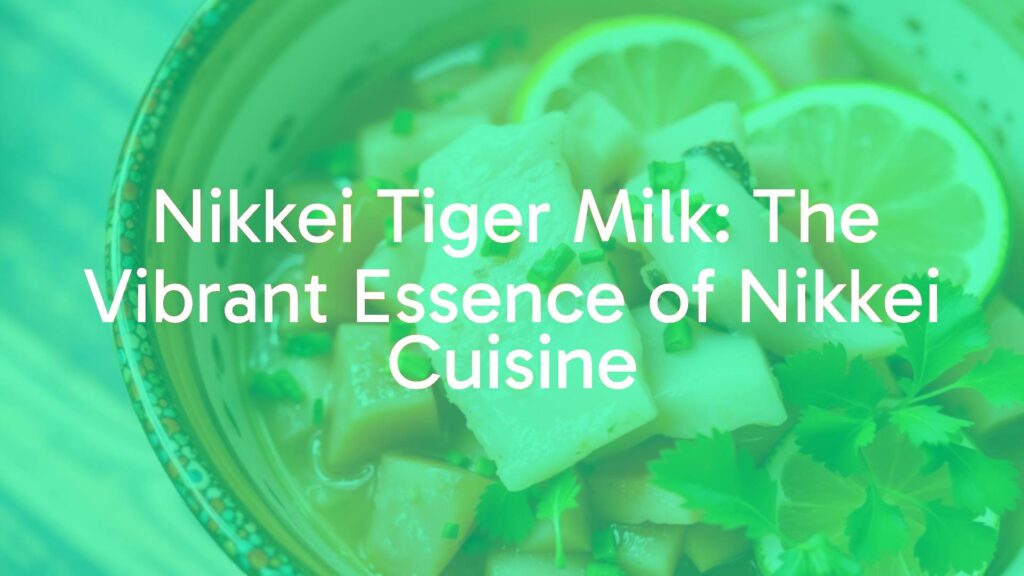
More than just a marinade, Nikkei tiger milk is now a celebrated element in its own right. It may be served alongside ceviche, drizzled over tiraditos (thinly sliced sashimi-style fish), or offered as a bold amuse-bouche at innovative Nikkei restaurants. The distinctive appearance—a pale, creamy emulsion flecked with herbs and bits of chili—hint at the lively flavors within. Its sharp, tingling acidity and subtle umami undertone act as both seasoning and palate awakener, highlighting the natural qualities of ultra-fresh seafood.
Distinctive Variations and Interpretation
The versatility of Nikkei tiger milk means it is joyfully adapted from kitchen to kitchen. Some chefs add miso paste for a richer, earthier taste; others play with aromatic oils, shiso leaves, or even infusions of sake. The level of chili heat and balance of sweetness and saltiness can also vary, depending on both Japanese and Peruvian influences present in the chef’s background. Regardless of variation, the essence remains: a bold, harmonious blend that captures the innovative spirit of Nikkei fusion.
Conclusion
Nikkei tiger milk is more than just a sauce—it’s the embodiment of cultural exchange and creative adaptation. Blending the best of Japanese subtlety and Peruvian zest, it encapsulates the story of Nikkei cuisine in every vibrant, tangy drop.
