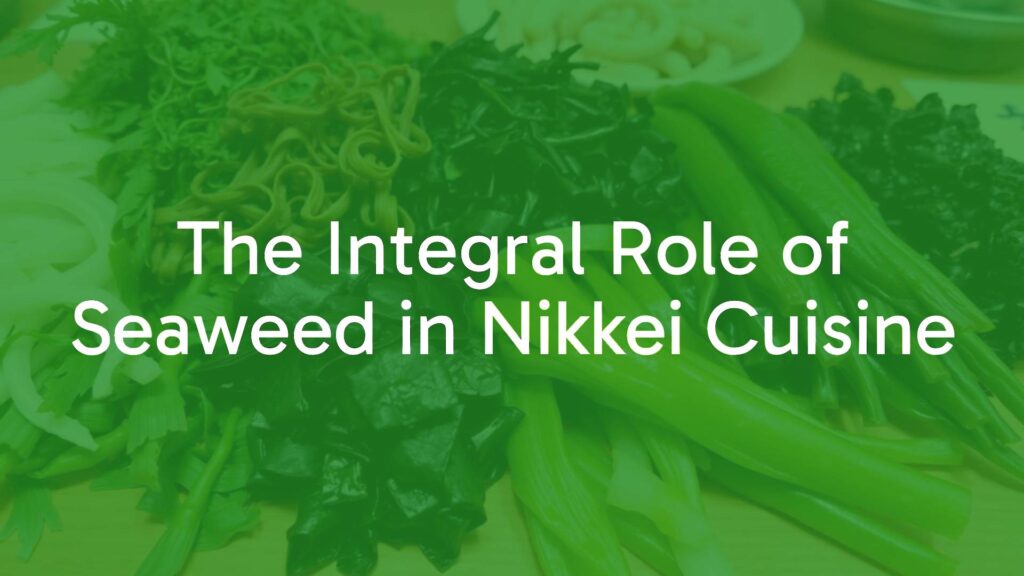
Understanding Seaweed in the Nikkei Culinary Tradition
Seaweed, in its many forms, has emerged as an essential element in Nikkei cuisine, the unique gastronomic fusion of Japanese and Peruvian culinary cultures. Its distinctive marine flavor, versatility, and nutritional value make it an indispensable bridge between two worlds, harmonizing traditional recipes and modern innovations.
Characteristics and Culinary Appeal
Seaweed is prized for its briny, umami-rich taste, a hallmark of Japanese cooking, and its diverse textures—ranging from the delicate crispness of toasted nori to the silky slipperiness of wakame. Its deep green to nearly black hues and ability to take on savory seasonings lend visual and sensory appeal to countless Nikkei dishes. As a naturally occurring plant from the ocean, seaweed brings not only flavor but also important nutrients such as iodine, vitamins, and minerals, aligning well with the health-conscious emphasis found in both Peruvian and Japanese foodways.
Historical Context: From Japan to Peru
The introduction of seaweed to Peruvian gastronomy traces back to the late 19th and early 20th centuries, accompanying the wave of Japanese immigration to Peru. Japanese settlers brought their culinary heritage, including kelp (kombu) and dried seaweed sheets, which became staples in home kitchens. Over generations, seaweed became woven into the fabric of Peruvian cuisine, integrated into traditional dishes and adapted to local tastes and ingredients.
Seaweed as a Symbol of Fusion
In Nikkei cuisine, seaweed acts as both a physical and symbolic connector between Japanese and Peruvian techniques. In Japan, seaweed is used as a wrapping, base, or seasoning, and in Peru, it finds new expression in ceviche garnishes, exotic tiraditos, and inventive maki rolls with local seafood and ají peppers. Chefs often employ seaweed to impart umami—deepening the flavors of broths and sauces or lending a savory crunch to finished plates. Whether ground into fine powder for dusting, rehydrated into salads, or used as a wrap for sushi with native Peruvian fillings, seaweed bridges the culinary philosophies of both cultures.
Defining Signature Nikkei Dishes
Seaweed is vital in signature Nikkei creations. Sushi and maki rolls, reimagined with Peruvian ingredients, rely on nori as an anchor for rice and seafood combinations that reflect both culinary identities. In soups and broths, kelp (kombu) is used to create stock bases that support local produce and fish, infusing dishes with depth and a true fusion of flavors. Salads incorporating wakame or hijiki offer fresh, oceanic nuances, while seaweed shards provide textural contrast in cold and warm appetizers alike.
Conclusion: The Ongoing Evolution of Seaweed in Nikkei Cuisine
Seaweed plays a transformative role in Nikkei cuisine, celebrating the merging of Japanese and Peruvian traditions while continually inspiring new culinary creations. Its adaptability and distinctive qualities ensure that it remains a touchstone for chefs and diners seeking the authentic flavors that make Nikkei cuisine a vibrant, ever-evolving culinary movement.
