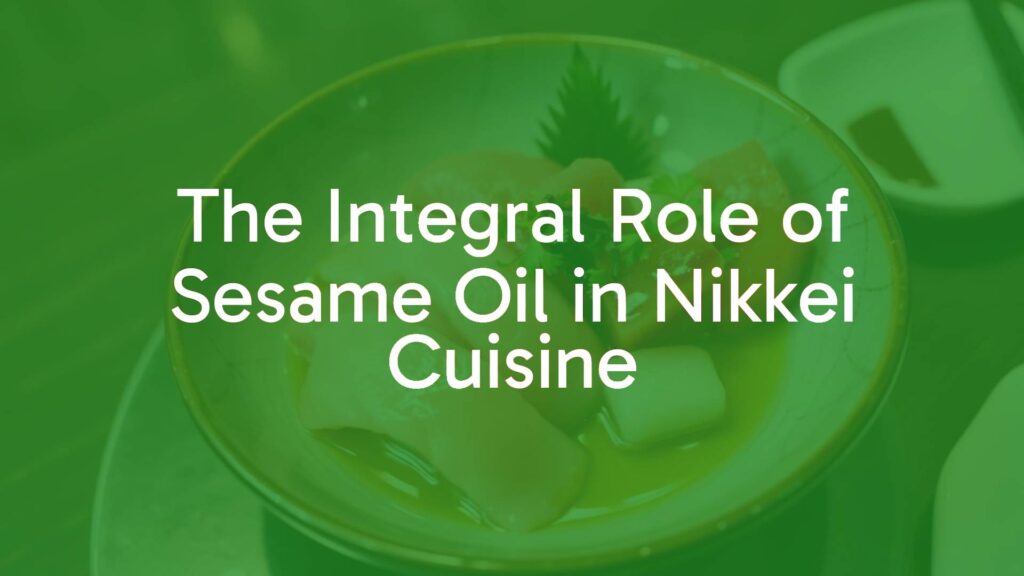
The Integral Role of Sesame Oil in Nikkei Cuisine
Introduction to Sesame Oil in the Nikkei Culinary Landscape
Sesame oil, with its nutty aroma and deep flavor, has become a staple ingredient in Nikkei cuisine, the pioneering fusion of Japanese and Peruvian gastronomic traditions. Its inclusion reflects both an homage to Asian culinary elements and an innovative adaptation to Peruvian local flavors. In Nikkei cuisine, sesame oil does more than enhance taste—it symbolizes the harmonious blending of two distinct culinary heritages.
Characteristics: Flavor, Texture, and Visual Appeal
Known for its distinctive toasty fragrance and rich, slightly sweet undertones, sesame oil brings a complexity that is unmistakable in any dish it touches. Its silky texture effortlessly coats ingredients, enhancing mouthfeel without overwhelming more delicate flavors. In terms of appearance, a drizzle of sesame oil can add a glossy sheen, visually elevating sashimi, tiraditos, and ceviches while signaling depth of flavor to the diner.
Historical Context: A Meeting of Worlds
The roots of Nikkei cuisine stretch back over a century, influenced initially by Japanese immigrants who arrived in Peru and began adapting familiar recipes with locally available ingredients. Sesame oil, a staple in East Asian kitchens, became a bridge between these two cultures, providing a familiar element for Japanese cooks while introducing new layers of flavor to Peruvian dishes. Its use in Nikkei cuisine symbolizes openness to innovation and respect for tradition, mirroring the experience of the Nikkei, or Japanese-Peruvian, community itself.
Blending Techniques: Where Japanese and Peruvian Traditions Meet
Sesame oil often enters Nikkei dishes at critical moments—sometimes as a finishing touch to highlight freshness, and other times as a foundational element in marinades and dressings. Japanese culinary techniques such as sashimi slicing and minimalist plating meet Peruvian traditions like ceviche preparation, with sesame oil uniting both through its aroma and taste. For example, a few drops may be added to a classic Peruvian tiradito, bringing a subtle, toasted note that accentuates both the raw fish and the zesty citrus of the leche de tigre.
Defining the Essence of Nikkei Fusion
What makes sesame oil essential to Nikkei cuisine is not only its flavor profile but also its versatility in balancing and melding contrasting elements. In fusion dishes, it tempers acidic and spicy tones with smooth, nutty undertones, helping to weave together bold Peruvian chilies and the umami of soy-based sauces in a single, harmonious experience. In essence, the use of sesame oil in Nikkei cuisine is a culinary conversation—a dynamic interplay that shapes the identity of this innovative gastronomic style.
Conclusion: The Continued Influence of Sesame Oil
Sesame oil remains a vital link in the ongoing dialogue between Japanese and Peruvian cuisines, enriching the Nikkei tradition with depth, nuance, and global appeal. Its role reaches beyond simple flavoring, embodying the spirit of fusion that defines Nikkei culinary artistry today.
